Classic · March 8
Flowers for March 8, Women’s Day
In Italy people give mimosa, in Russia tulips, and in Spain and Latin America 8M is above all a day of protest. How to give flowers that day without emptying it of meaning.

- When
- March 8every year
- Italy
- Mimosasince 1946
- Russia and Eastern Europe
- Tulipsand other spring flowers
- Color of 8M
- Purplesymbol of feminism
Why March 8
International Women’s Day was born out of the labor and suffrage movements of the early 20th century. In 1910, at an international conference of socialist women in Copenhagen, the German Clara Zetkin proposed holding a yearly day for women’s rights, and in 1911 it was celebrated for the first time in several European countries. The March 8 date was set later, partly because of the 1917 women’s strike in Petrograd that sparked the Russian Revolution. The United Nations officially recognized it in the 1970s.
In other words, it is a day of protest and demands, not a commercial holiday. That doesn’t stop giving flowers from being part of the tradition in some countries.
Which flowers are given in each country
| Date | What is celebrated and why | Flower | Color | Where |
|---|---|---|---|---|
| every year | International Women’s Day In Italy a sprig of mimosa has been given since 1946; in Russia and Eastern Europe tulips are typical. In Spain and Latin America 8M is above all a day of protest: if you give flowers, make them a recognition, not a substitute for listening. | Mimosa or tulips | Yellow | Italy, Russia and Eastern Europe |
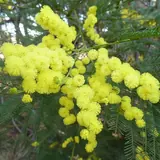
- Italy: mimosa. In 1946 the Union of Italian Women was looking for a symbol accessible to all; it chose this yellow flower because it blooms in early March and grows everywhere. Today a little sprig is given to coworkers, friends and family.
- Russia and Eastern Europe: tulips and other spring flowers. There March 8 is a public holiday and resembles an extended Mother’s Day: all women are congratulated.
- Spain and Latin America: there is no traditional flower. The day is mostly marked by marches, strikes and events, and the color that represents it is purple.
- China and Vietnam: it is also common to congratulate the women around you and give them flowers.
Purple, the color of 8M
Purple has been associated with the women’s rights movement since the British suffragettes of the early 20th century, who used purple together with white and green. Today it is the color of the banners, scarves and T-shirts of 8M in Spain and Latin America. If you want to give meaningful flowers that day, a bouquet in purple tones, such as lavender, iris or lisianthus, connects directly with the date. There’s more about this color in the purple flowers guide.
How to give flowers on 8M without taking away its meaning
- Make it recognition, not a substitute. A bouquet doesn’t make up for inequality the rest of the year. Pair it with something real: sharing chores, listening, supporting a project, joining the march.
- Think about who you’re giving it to. A coworker who pulled off a project, a friend who inspires you, your mother, your grandmother: say why.
- Avoid the “beauty day” tone. 8M isn’t about compliments.
- Buy from women florists or growers if you have the option: it is a consistent way to celebrate.
Which flowers to give
- Mimosa: the option with the most history. It is in full season in Spain in February and March.
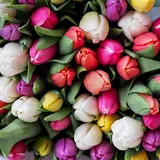
- Tulips: cheerful and in season; yellow and purple ones fit the date.
- Purple flowers: lavender, iris, lisianthus or purple anemones, for the color of feminism.
- A plant: a gift that lasts and doesn’t wilt the next day.
If the person is allergic to pollen, avoid mimosa: it sheds a lot. Tulips are a safe alternative.
Remind me 3 days before
Download the reminder and open it with your phone’s calendar: it repeats every year and alerts you three days before, so you have time to order the bouquet.
Frequently asked questions
Which flower is given on March 8?
It depends on the country. In Italy, a sprig of mimosa since 1946. In Russia and Eastern Europe, tulips. In Spain and Latin America there is no traditional flower and the day is mainly about protest.
Why is mimosa the flower of 8M?
Because the Union of Italian Women chose it in 1946: it blooms in early March, it was cheap and it grew everywhere, so anyone could give it.
Is it OK to give flowers on Women’s Day?
It can be a nice gesture of recognition, but it doesn’t replace the meaning of the day, which is to demand equality. It is better accompanied by listening, support or joining the cause.
Why is purple the color of 8M?
Purple has been associated with the suffragist and feminist movement since the early 20th century and today it is the color of the March 8 marches.
Since when has Women’s Day been celebrated?
The idea came up in 1910 at an international conference of socialist women in Copenhagen. The UN officially recognized it in the 1970s.