By flower · January to March
Mimosa: the yellow flower of March 8
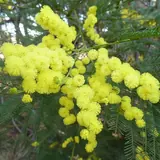
Little yellow pompoms, a sweet scent and a political history: mimosa has been the flower of International Women’s Day in Italy since 1946.

- Scientific name
- Acacia dealbatafrom Australia
- Season
- January to Marchin Spain; July and August in Chile
- Meaning
- Strength and sensitivityand solidarity among women
- Key date
- March 8Italy
What mimosa means
Mimosa is a flower of contrasts: its branches are tough and grow in difficult terrain, but its flowers are soft little pompoms that fall apart at the slightest touch. That’s why it is associated with strength and sensitivity at the same time. Its yellow also announces the end of winter: it is one of the first flowers of the year.
Mimosa and March 8 in Italy
In 1946, just after the war, the Union of Italian Women was looking for a symbol for the first International Women’s Day in freedom. They wanted a flower that bloomed in early March, was cheap and grew everywhere, so anyone could give it. Mimosa was the one chosen. Since then, every March 8 in Italy a sprig of mimosa is given to mothers, colleagues, friends and coworkers.
| Date | What is celebrated and why | Flower | Color | Where |
|---|---|---|---|---|
| every year | International Women’s Day In Italy a sprig of mimosa has been given since 1946; in Russia and Eastern Europe tulips are typical. In Spain and Latin America 8M is above all a day of protest: if you give flowers, make them a recognition, not a substitute for listening. | Mimosa or tulips | Yellow | Italy, Russia and Eastern Europe |
In Spain and Latin America, 8M is above all a day of protest. If you want to give flowers that day, there are ideas and context in the Women’s Day guide.
Mimosa season
- Spain: January, February.
- Mexico and Central America: out of local season (greenhouse-grown or imported).
- Argentina, Chile and Uruguay: July, August.
In Spain it blooms between January and March; in Galicia, Asturias or on the Mediterranean coast whole hillsides turn yellow in February. In Chile it is called aromo and blooms in the middle of the southern winter, between July and August.
A beautiful but invasive flower
Mimosa is native to southeastern Australia and Tasmania. It arrived in Europe as an ornamental plant in the 19th century and adapted so well that today it is considered an invasive species in several parts of Spain and Portugal, especially in Galicia: it spreads fast, displaces native vegetation and resprouts vigorously after fires. That’s why planting it in the garden isn’t recommended in those regions, although its cut branches are still a lovely gift.
How to make it last
- Buy it with the pompoms still closed or half open: they will open at home.
- Trim the branches and put them in lukewarm water. The warmth helps the pompoms open.
- A humid environment: mimosa dries out very fast with the heating on. Misting a little water around it (not on the flowers) helps.
- About three to five days is normal in a vase. Afterwards, instead of throwing it away, dry it.
Dried mimosa
Hang the branches upside down in a dry, ventilated place out of direct sun. In one or two weeks they will be dry and keep their yellow color for months. They look great in ceramic vases or combined with dried eucalyptus, wheat or lavender.
Tip: its pollen can bother people with allergies. If the gift is for someone with spring allergies, choose yellow tulips, which are the 8M flower in Russia and Eastern Europe.
Remind me 3 days before
Download the reminder and open it with your phone’s calendar: it repeats every year and alerts you three days before, so you have time to order the bouquet.
Frequently asked questions
Why is mimosa given on March 8?
Because in 1946 the Union of Italian Women chose it as the symbol of Women’s Day: it blooms in early March, it was cheap and plentiful, and anyone could give it.
What does mimosa mean?
Strength and sensitivity at the same time, and in Italy solidarity among women. Because of its yellow color it is also associated with joy and the arrival of spring.
When does mimosa bloom in Spain?
Between January and March, depending on the area. In Galicia and on the Mediterranean coast it paints whole hillsides yellow in February.
What is aromo in Chile?
It is the name given in Chile to the same mimosa, Acacia dealbata. There it blooms in the middle of winter, in July and August.
How do you dry mimosa?
Hang the branches upside down in a dry place out of the sun. In one or two weeks they are dry and keep their color for quite a while.